Heating Your Southern Maine Home: What Buyers and Sellers Should Know
Every fall, as the first oil delivery of the season shows up, heating becomes a hot topic. Buyers want to know what it'll cost to stay warm. Sellers wonder whether their system helps or hurts their sale. And folks moving here from away often have no idea what an oil tank or a mini-split is.
Here's a look at the heating options you'll find in Portland, and the surrounding towns, what they cost to run, and how they affect buying and selling a home.
Your heating options
Maine relies on heating oil more than any other state. About half of Maine households still heat primarily with oil, the lowest share in decades. The mix is changing quickly, especially around Greater Portland.
Oil. Still the most common system in older Southern Maine homes, usually a boiler with baseboard or radiators. It's reliable and every local service company knows it. The downsides are price swings, scheduling deliveries, and the tank itself.
Propane. Common where natural gas isn't available. It runs boilers, furnaces, on-demand water heaters, fireplaces, and ranges. Many propane tanks are leased from the supplier, which matters when a home changes hands.
Natural gas. Typically cheaper and lower maintenance than oil, with no deliveries to schedule. But most of Maine has no gas lines. In our area, Unitil serves parts of Portland, South Portland, Cape Elizabeth, Scarborough, Falmouth, and other towns, and only on streets with a gas main. Never assume; check the street.
Heat pumps. Electric systems that heat in winter and cool in summer, either ductless mini-splits or ducted. According to Efficiency Maine, cold-climate heat pumps are almost three times as efficient as electric baseboard. Many homeowners keep their boiler as backup for the coldest nights.
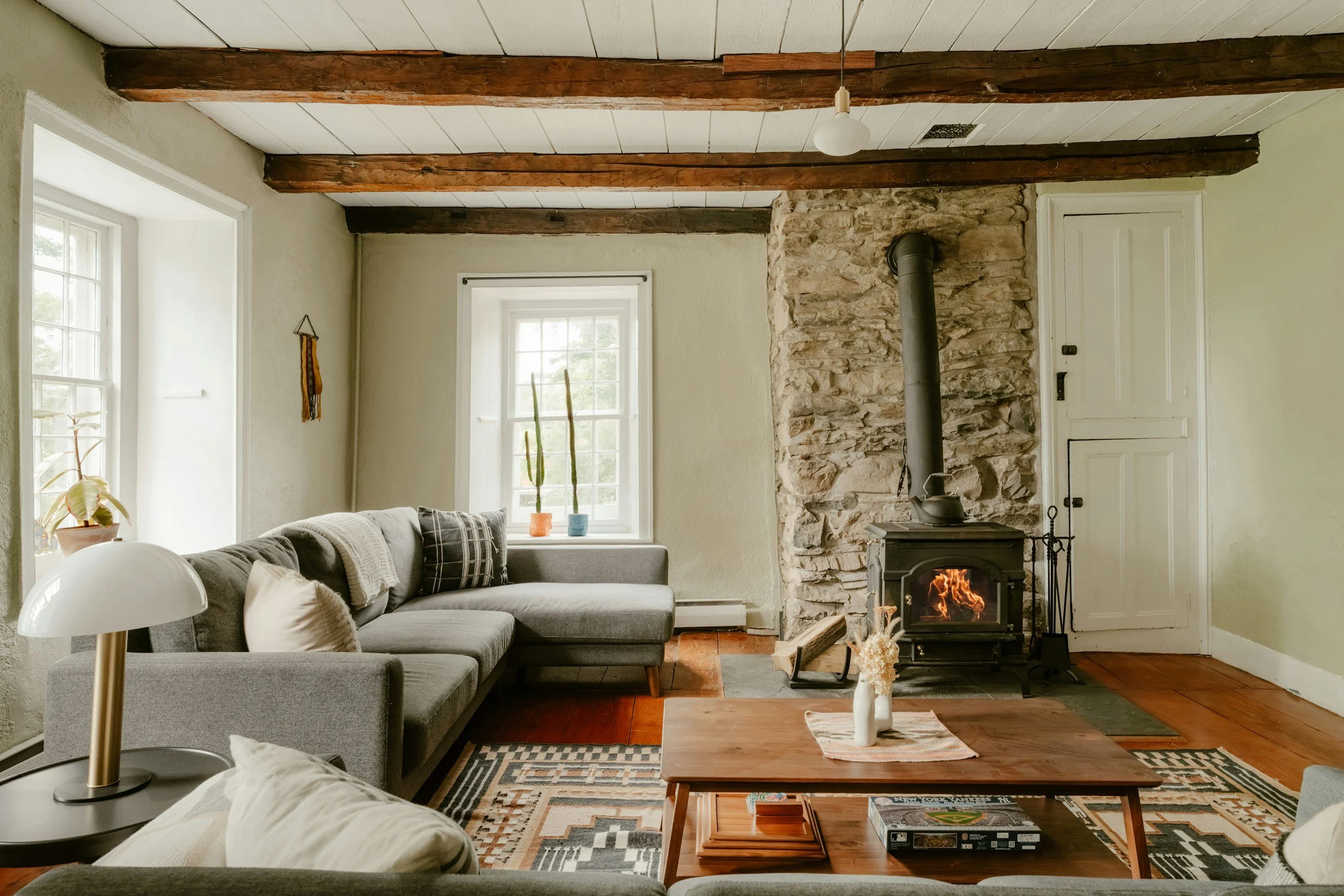
Wood and pellet stoves. A classic Maine supplement that can cut fuel bills and adds a lot of charm. Buyers will want to know when the chimney was last inspected, and insurers will ask too.
Electric baseboard. Cheap to install, so you'll often see it in condos and additions. It's usually one of the most expensive ways to heat, and many owners are replacing it with heat pumps.
Geothermal. Less common and found mostly in custom and newer homes. Very efficient to run, but expensive to install.
Comparing costs
What you'll actually pay depends on fuel prices, how efficient the system is, and how well the house is insulated. Two free tools make it easy to compare:
The Maine Department of Energy Resources updates a heating fuel price table and cost comparison every week during heating season. It covers oil, propane, natural gas, wood, pellets, and electric options, including heat pumps, with Greater Portland prices broken out separately.
Efficiency Maine's Compare Home Heating Costs calculator estimates your annual heating cost with different systems so you can see what switching might save.
Don't forget the fuel in the tank
With heating oil prices where they are, the fuel left in the tank at closing is real money. As of early October 2026, oil averaged about $5.96 a gallon in Greater Portland. The most common residential tank holds 275 gallons, and a filled tank usually has 225 to 250 gallons in it. That's roughly $1,300 to $1,500 in oil, and some homes have two tanks.
Sellers: If you've filled the tank this fall, make sure your purchase and sale agreement spells out that the buyer will reimburse you for the fuel remaining at closing, typically based on a reading from the fuel company and the current price per gallon.
Buyers: Factor the fuel reimbursement into your budget when you write your offer. It's a negotiable term, so it's worth discussing with your agent up front rather than being surprised at the closing table.
The same goes for propane if the tank is owned. With a leased tank, the propane company usually handles the transfer directly.
Weatherize first
The cheapest heat is the heat you don't lose. Many older Maine homes are under insulated and drafty, and no heating system can make up for that. Insulation and air sealing lower your bills whatever fuel you use, and they help prevent ice dams, frozen pipes, and cold drafts.
Start with a home energy assessment. An auditor can show you where heat is escaping, usually through the attic, basement, and around doors and windows. Efficiency Maine offers insulation and air sealing rebates at every income level, with the largest rebates for income-eligible households. Work must be done by one of their registered installers.
When the power goes out
Here's something that surprises a lot of newcomers: almost every modern heating system needs electricity. Oil and gas boilers, furnaces, and heat pumps all rely on power to run burners, pumps, and fans. When a nor'easter knocks out the lines, the heat goes with them.
A few ways Mainers stay warm through outages:
Standby generators. Permanently installed and wired to your panel, usually running on propane or natural gas. They switch on automatically and are increasingly common along the coast.
Portable generators. A lower-cost option for running the essentials. Have an electrician install a transfer switch so you can connect it safely, and never run one indoors or in a garage.
A woodstove or gas fireplace that works without power. A reliable backup heat source for the living area.
Carbon monoxide detectors. Essential in any home with fuel-burning appliances, and especially during outages.
Seasonal and second homes
A lot of coastal and island homes sit empty for part of the winter. A frozen pipe in an empty house can turn into a very expensive spring surprise. If you won't be there, you have two choices: keep the heat on at a safe minimum, or fully winterize the house by draining the plumbing and shutting it down.
If you keep the heat on:
Monitor it remotely. A Wi-Fi thermostat plus low-temperature and water-leak sensors will alert your phone before a small problem becomes a big one.
Set up automatic fuel delivery so the tank never runs dry while you're away.
Line up a local contact. Have someone who can check the house after storms and power outages.
Check your insurance. Many policies have requirements for homes left vacant or unoccupied for extended periods.
If you'd rather winterize, hire a plumber or caretaker who does it every year. It's worth doing right.
The bottom line
There's no single best heating system for every Maine home. The right setup depends on the house, the neighborhood, and how you live. A well-sealed home and a plan for outages will keep you warm and comfortable whatever system you have.
Thinking about buying or selling in Cape Elizabeth, Portland, or anywhere in Southern Maine? I'm happy to talk through heating, updates, and what's worth doing before you list. Reach out anytime.