Why Maine's "Safe Climate" Is Becoming One of the Best Reasons to Buy Here
There's something about August in Maine. The days still hold that summer warmth, but the nights have started to cool off, and the fresh air feels clean and crisp. It's a good reminder of how lucky we are to live here.
Buyers moving to our area aren't just asking about school districts and commute times, they're asking about wildfire risk, flood zones, and hurricane exposure. Climate risk is now a real factor in where people choose to put down roots, and Maine has a genuinely strong story to tell.
What We're Actually Protected From
Compared to much of the country, Maine simply doesn't carry the same exposure:
Wildfires are a defining risk in California and much of the West but are rare in Maine, thanks to our climate and forest composition.
Hurricanes are a real threat to the Gulf Coast, Florida, and the Carolinas, but Maine's northern position on the East Coast means storms are almost always significantly weakened by the time they reach us, if they reach us at all.
Earthquakes, common across the West Coast and parts of the Midwest, are a non-issue here. We're not near a major fault line.
Tornadoes, which regularly threaten the Plains and South, are extremely uncommon in Maine.
Our real weather story is snow, nor'easters, and the occasional summer thunderstorm. All things Maine infrastructure, builders, and homeowners are simply built for. It's predictable, seasonal, and manageable, rather than sudden and catastrophic.
The Natural Resources Behind the Numbers
Maine's stable, low-risk climate isn't disconnected from the state's natural resources, it's part of the same picture.
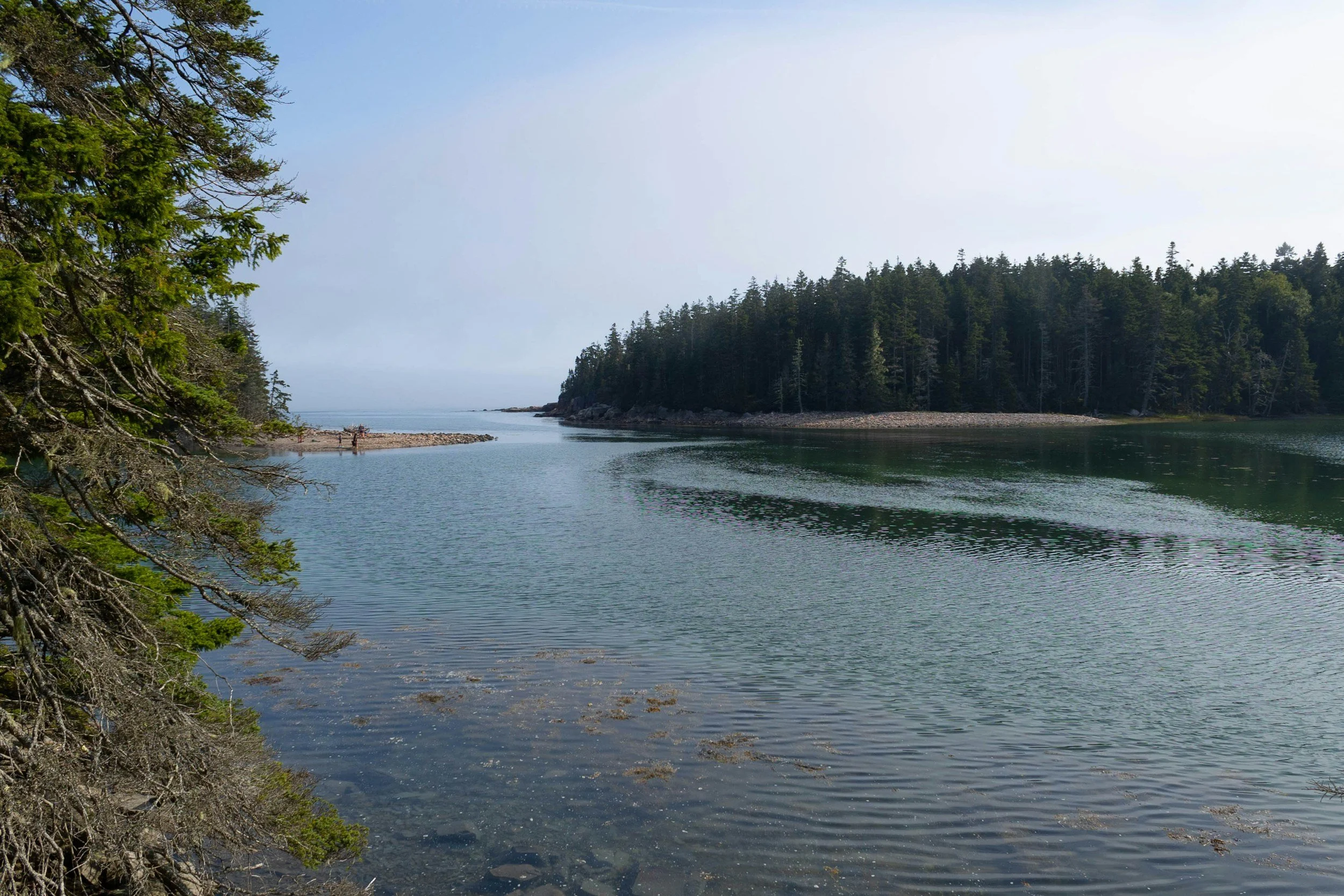
“Maine is the most forested state in the country, with forests covering roughly 89% of its land area, well ahead of second-place New Hampshire. That's not just scenery. Forests moderate local temperatures, absorb carbon and pollutants like carbon monoxide and sulfur dioxide, and help buffer the kind of extreme heat and drought stress that's driving problems in less-forested states.”
That forest cover shows up directly in air quality. Maine consistently ranks among the states with the cleanest air in the country, helped by its low population density, limited heavy industry, and prevailing winds off the Atlantic. And with roughly 6,000 lakes and ponds, thousands of miles of rivers and streams, and a coastline shaped by clean, cold ocean water, access to clean water here isn't a luxury amenity, it's simply the baseline.
For buyers coming from areas dealing with wildfire smoke, drought-driven water restrictions, or industrial air pollution, this is often just as compelling as the disaster-risk numbers. Maine offers a genuinely healthier everyday environment, not just a lower-risk one.
Buyers Are Feeling It And Moving Because of It
A lot of buyers start out as visitors who fall in love with the coast on a summer trip and start wondering what it would take to actually live here. I recently met with a couple from Texas who told me that the brutally hot summers back home had gone from an annoyance to a real quality-of-life issue. Maine’s climate, natural resources, and way of life was part of their reason to start looking in Maine for a vacation home.
The data backs up what they're feeling. According to Climate Central,“Phoenix set a record 113 consecutive days at or above 100°F in 2024, and Arizona projects up to 117 days a year over 100°F by 2030. Climate Central's Climate Shift Index found human-caused warming made a recent Southwest heat wave at least five times more likely, and over the past 50 years, cities across Texas, inland California, and the broader Southwest have seen some of the sharpest increases in extreme-heat days in the country.”
Compare that to a Maine summer, where a stretch of 90-degree days is considered notable rather than routine, and it's easy to see why buyers from these fast-warming regions are taking a serious look at what four moderate seasons actually feels like.
The Seasons Still Shape Our Market Calendar
Even with a stable climate overall, Maine's four distinct seasons still create a real rhythm to our buying and selling market:
Spring brings the deepest buyer pool of the year as homes show at their best and buyers who spent winter browsing online start touring in person.
Summer is peak season, especially for waterfront and island properties as buyers want to picture themselves on the porch in July.
Fall tends to bring serious and motivated buyers that may have been introduced to Maine during the summer months and are now are thinking about returning.
Winter is our off-peak season, especially during the busy holiday season. But buyers house hunting in January are almost always motivated by a job, a move, or a firm timeline rather than casual browsing.
The Takeaway
Maine's four seasons aren't just charming, they're part of a climate that's genuinely lower-risk than most of the country, and that's becoming a real factor in buyer decision making. Whether you're a longtime Mainer or someone who fell in love with the state on vacation and started thinking about what it would take to move here, it's worth understanding both the seasonal rhythm of our market and the bigger picture of why so many people are looking at Maine as a safer, more comfortable place to live.
Sources: WalletHub natural disaster state rankings; FEMA disaster declaration data (via AgileRates); EPA county-level climate resilience analysis (via The Hill); Nature Climate Change study on unpriced climate risk in housing markets; World Population Review state disaster rankings; Climate Central Climate Shift Index; International Institute for Environment and Development city heat-day analysis (via Texas Campaign for the Environment/CNN); USDA Forest Service Forest Inventory and Analysis data on Maine forest cover; World Population Review air quality rankings.